
Table of Contents
ToggleHow to Automate your business with AI - A practical Guide for 2025.
Introduction
Automation isn’t just for big corporations anymore. Thanks to AI, small and medium businesses can streamline operations, free up human time, and focus on growth. In this guide you’ll discover how to automate your business with AI — from mindset and strategy to tools, workflows and real-world examples.
1. Start with Strategy & Readiness
Before automating anything, you need clarity on why you’re doing it. As Harvard Business School’s guide notes, aligning business objectives, assessing data readiness and creating an ethical framework are key. (Source)
- Define your business goal (e.g., “reduce manual invoice processing by 70%” or “automate lead qualification”).
- Choose simple, high-impact processes to automate first (“low hanging fruit”).
- Audit your current workflows and data streams.
2. Pick the Right Tools & Technologies
AI isn’t just “plug & play”, but many platforms now allow low-code or no-code automation. For example, Make lets you drag-and-drop connectors and tie in generative AI models for workflow tasks. Make
Also, platforms like Zapier let you integrate 4000+ apps and build AI-powered agents in your workflow. Zapier
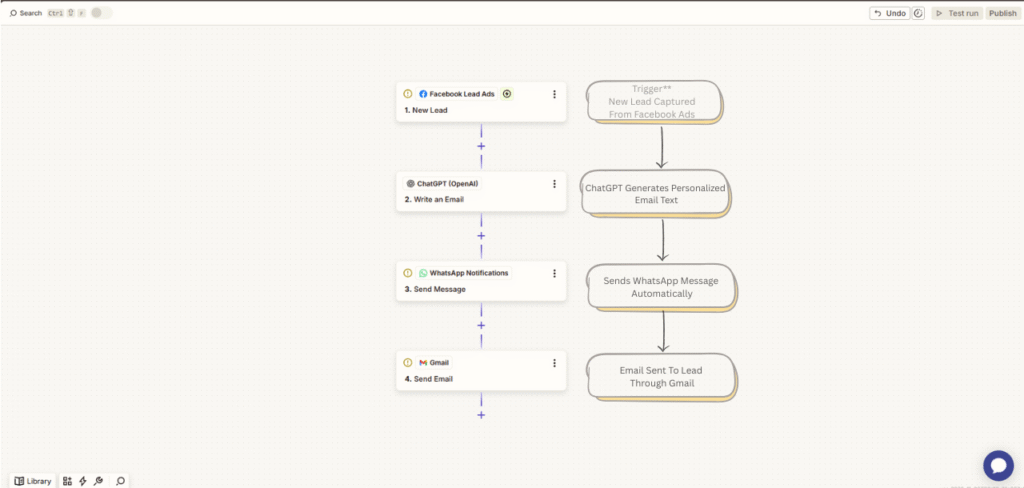
This AI automation demo uses smart agents to instantly send personalized emails and WhatsApp messages when a new lead shows interest, streamlining customer engagement across channels.
3. Choose High-Impact Processes to Automate
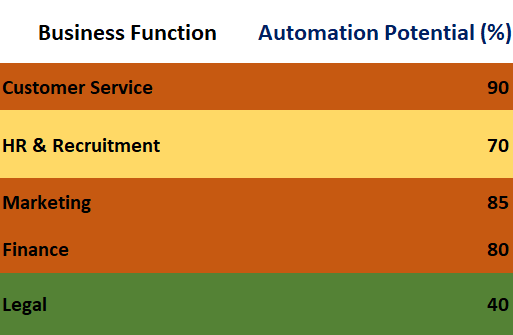
Focus on areas where AI + automation deliver high value:
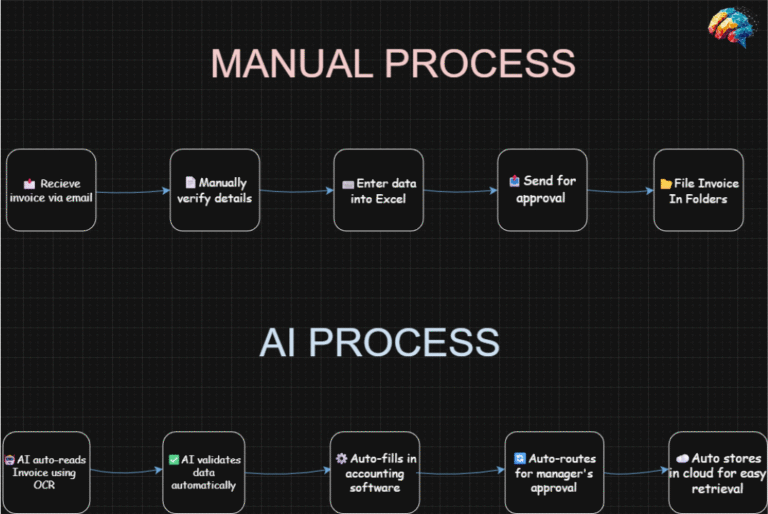
- Finance & accounting (invoice processing, expense tracking)
- Customer support / chatbots (24/7 replies + routing)
- Lead generation & marketing (qualify leads automatically)
4.Build, Test & Deploy
Use templates or pre-built workflows in your chosen tool.
Begin with a pilot project (small scale) and measure results.
Monitor key metrics (time saved, error reduction, cost saving).
Scale automation once value is proven.
Live KPI Tracker: Before vs After Automation
Pilot
Test your AI or business idea on a small scale to validate assumptions and minimize risk.
Measure
Track performance metrics, collect data, and learn what works before scaling up.
Scale
Expand successful strategies, optimize workflows, and automate processes for growth.
5. Overcome Common Challenges
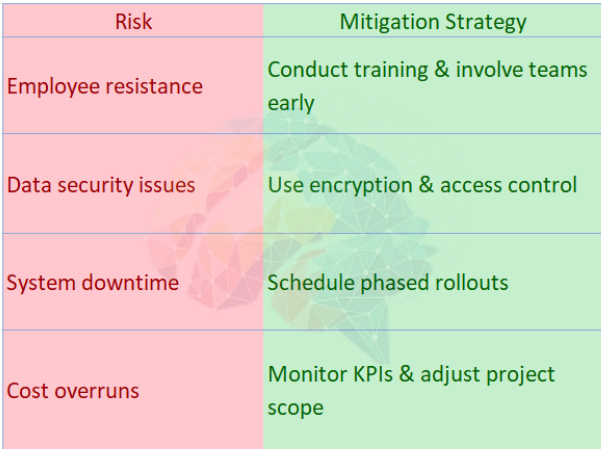
Adopting AI automation isn’t without hurdles:
Data quality and silos can sabotage outcomes. online.hbs.edu
Change management and human buy-in are crucial.
Ethical & compliance issues must be addressed (AI decisions need oversight).
Expect continuous iteration — automation is not a one-time event. Boomi
6. Real-World Example Snapshots
- Example: Automating lead qualification and follow-up using AI agents (as seen in entrepreneur pieces). Entrepreneur.com
- Example: Automating invoice processing and workflow approvals in small business finance. Automated Dreams
7. What’s Next: Scale & Future-Proof
Once you’ve automated core processes, look at more advanced opportunities:
- Multi-step AI agents that combine workflow automation + decision making.
- Predictive and prescriptive analytics driving proactive workflows.
- Continuous workflow discovery (identify new automation opportunities automatically).